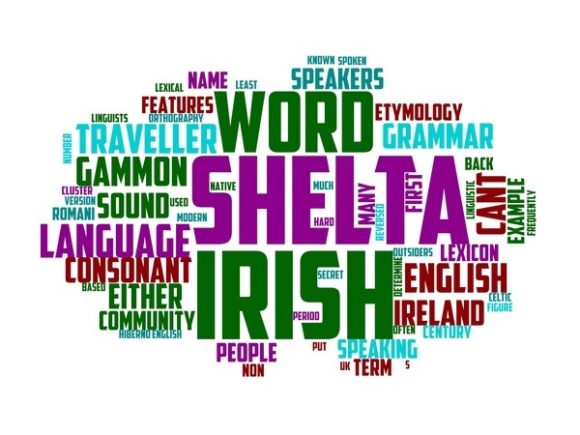
Shelta Typography Tumbler: A Hand-Drawn Word Cloud for Authentic, Versatile Design
The Shelta Typography Tumbler is a hand-drawn, colorful word cloud built around expressive, organic letterforms—not generated by algorithm or AI, but crafted deliberately with pen and paper. Unlike standard typographic assets that rely on clean vectors or system fonts, this resource embraces imperfection: subtle line variations, uneven spacing, overlapping letters, and joyful chromatic layering. It’s designed not as a single-use graphic, but as a flexible visual element—ready to be scaled, recolored, cropped, layered, or integrated across physical and digital applications.
What Sets Shelta Typography Tumbler Apart?
At its core, the Shelta Typography Tumbler prioritizes human texture over technical precision. Its words—like “create,” “inspire,” “joy,” “bold,” “grow,” and “wonder”—are arranged intuitively, not alphabetically or hierarchically. The layout feels alive: some letters tilt, others nest inside larger glyphs; color shifts aren’t uniform gradients but intentional spot hues applied like watercolor washes or marker strokes. This gives it immediate warmth and approachability—qualities often missing in scalable vector word clouds or font-based alternatives.
It’s delivered as high-resolution PNG and vector (SVG/EPS) files, supporting both print fidelity and digital adaptability. Unlike many downloadable word clouds that lock users into fixed compositions or limited color palettes, Shelta Typography Tumbler includes editable layers in source files—so designers can isolate individual words, adjust saturation, or reposition clusters without degrading quality.
How It Fits Into Real-World Creative Workflows
Because of its hand-crafted origin and intentional flexibility, the Shelta Typography Tumbler works well where authenticity matters more than uniformity. For example:
- A small-batch apparel brand might screen-print a cropped section onto organic cotton tees—using just three words (“breathe,” “move,” “feel”) as a subtle chest motif.
- A stationery designer could place the full composition behind translucent vellum on an invitation suite, letting the color and shape suggest energy without overwhelming fine typography.
- An educator creating classroom posters might extract single letters to build custom bulletin board borders—pairing “S” and “T” with student-made illustrations.
- A ceramicist printing mugs might scale and rotate one cluster to wrap around a tumbler’s curve, using the natural flow of the hand-drawn forms to guide the eye.
It also adapts across media where rigid grids or strict alignment rules don’t apply—textile repeats, embroidered patches, sticker sheets, scrapbook embellishments, or even laser-cut wood signs. Its strength lies in context where viewers expect personality, not polish.
Comparing Approaches: When Hand-Drawn Fits—and When It Doesn’t
Not all word-based design needs benefit from this style. Consider these practical tradeoffs:
Strengths
- Emotional resonance: Human-drawn elements signal care and intention—valuable for wellness brands, indie publishers, or handmade goods.
- Design flexibility: Because it’s not tied to a font file or auto-layout engine, you control hierarchy, density, and emphasis manually—ideal for custom editorial layouts or bespoke packaging.
- Cross-medium resilience: Works equally well at 2 inches tall on a gift tag or 48 inches wide on a conference banner—no pixelation, no awkward scaling artifacts.
Limitations
- Editing complexity: Adjusting individual words requires vector literacy or image-editing familiarity. Users expecting drag-and-drop font replacement will find it less intuitive than a true variable font or web-based word cloud generator.
- Consistency challenges: If your project demands identical styling across dozens of products (e.g., corporate swag with strict brand guidelines), the organic variation may require extra refinement to meet compliance standards.
- Language constraints: The current version features English vocabulary curated around uplifting, action-oriented themes. It isn’t built for multilingual adaptation or technical terminology.
When to Choose Shelta Typography Tumbler—And When to Look Elsewhere
The Shelta Typography Tumbler is most effective when your goal is to communicate warmth, creativity, or personal voice—not neutrality, speed, or scalability across hundreds of variants. It shines in projects where the audience values craft: boutique retail, artisanal food labels, mindfulness apps, independent publishing, or educational materials aimed at children or creative learners.
Conversely, if you’re building a dynamic website where word clouds update in real time based on user input—or need machine-readable text for SEO, accessibility, or translation—the Shelta Typography Tumbler won’t serve that function. Similarly, for large-scale branding systems requiring strict typographic hierarchy (e.g., a university’s official communications), a carefully paired serif/sans-serif combination with defined weights and optical sizing remains more reliable.
It also differs meaningfully from font-based alternatives. While some designers reach for decorative display fonts labeled “handwritten” or “script,” those are still constrained by character sets, kerning pairs, and licensing restrictions. The Shelta Typography Tumbler bypasses those limits entirely—it’s a composition, not a typeface. You’re not typing with it; you’re composing *around* it.
Practical Integration Tips
To get the most from the Shelta Typography Tumbler, consider these realistic usage patterns:
- Start with extraction: Use the vector layers to pull out only the words relevant to your message—then pair them with minimal sans-serif body text for contrast and clarity.
- Respect negative space: Because the composition is dense, avoid placing it over busy backgrounds. A solid pastel, textured paper scan, or soft gradient works best.
- Test legibility early: At smaller sizes (under 1 inch tall), some overlapping letters or fine strokes may blur. Preview at actual output size before finalizing for embroidery or foil stamping.
- Think in layers: In digital mockups, place the word cloud on a multiply or overlay blending mode to let underlying textures show through—enhancing depth without adding visual noise.
Broader Context: Where Hand-Drawn Typography Fits Today
In a landscape increasingly saturated with AI-generated visuals and algorithmic layouts, hand-drawn resources like the Shelta Typography Tumbler respond to a quiet but growing preference for tangible, human-scaled design. They don’t replace tools like Adobe Fonts or cloud-based word cloud generators—but they offer a distinct lane: one rooted in authorship, restraint, and tactile sensibility.
That doesn’t mean it’s “better” in absolute terms. It means it serves a different set of priorities—priorities that align with certain audiences, production methods, and expressive goals. Whether you're updating a product line, designing an event identity, or developing teaching materials, evaluating that alignment—rather than defaulting to convenience or trend—is what leads to durable, resonant work.
Ultimately, the Shelta Typography Tumbler is a tool for intentionality. It invites slowing down, selecting deliberately, and building meaning—not just filling space. That makes it especially useful for creators who treat typography not as decoration, but as part of the story.